Showing posts with label vitamin c. Show all posts

Friday, May 10, 2013

MORNING LEMON WATER

Benefits Of Drinking Warm Lemon Water
 

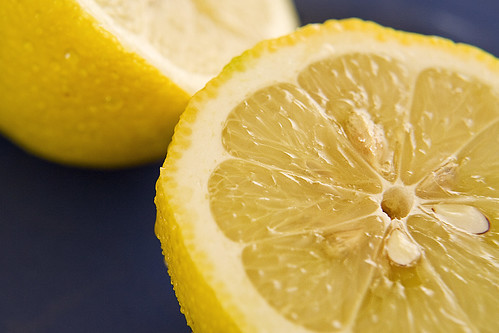
Start the day out with a mug of warm water and the juice of half a lemon. It's so simple and the benefits are just too good to ignore.

Warm water with lemon:

1. Boosts you're immune system
... Lemons are high in Vitamin C and potassium. Vitamin C is great for fighting colds and potassium stimulates brain & nerve function and helps control blood pressure.

2. Balances pH
...Lemons are an incredibly alkaline food, believe it or not. Yes, they are acidic on their own, but inside our bodies they're alkaline (the citric acid does not create acidity in the body once metabolized). Remember, an alkaline body is really the key to good health.

3. Helps with weight loss
...Lemons are high in pectin fiber, which helps fight hunger cravings. It also has been shown that people who maintain a more alkaline diet lose weight faster. And, my experience is that when I start the day off right, it's easier to make the best choices for myself the rest of the day.

4. Aids digestion
...The warm water serves to stimulate the gastrointestinal tract and peristalsis (the waves of muscle contractions within the intestinal walls that keep things moving).

5. Acts as a gentle, natural diuretic
...Lemon juice helps flush out unwanted materials because lemons increase the rate of urination in the body. Toxins are, therefore, released at a faster rate which helps keep your urinary tract healthy.

6. Clears skin
...The vitamin C helps decrease wrinkles and blemishes. Lemon water purges toxins from the blood which helps keep skin clear as well.

7. Hydrates the lymph system —


Source: Holistic Health Practioners - Visit their site for more great info.
DONT FORGET TO SHARE IT

Saturday, June 16, 2012

HOMEMADE ELECTROLYTE REPLACEMENT

Recipe for a HOMEMADE ELECTROLYTE REPLACEMENT juice.


I can’t quite bring myself to pay over $5 for a quart of Pedialyte when I know that I can make it at home and that it not only costs pennies to make, but is far superior in nutritive value and function.

The goal of Pedialyte is to replace the electrolytes and trace minerals that are lost when you become dehydrated, which is especially dangerous and can happen quickly in little ones.  However, the “beneficial” contents of pedialyte (Sodium, Potassium, Chloride, and Zinc ) are not bio-available; meaning that these minerals are synthetically produced and more or less flush right out of your child’s system.

So instead of reaching for the food-color laden, artificially flavored dextrose (aka, Pedialyte), make your own natural electrolyte replacement drink at home!  The ingredients to this ARE bio-available; they occur naturally and are easily absorbed, making them more effective (and healthier!)

Here is the recipe that I use, but it can be tweaked for flavor and age (see below)

Lemon Electrolyte Drink
  • 1 quart of water
  • juice of 2-3 lemons (fresh is preferable, but I’ve also used 1/3 c. lemon juice concentrate in a pinch)
  • 1/3 c. raw honey (do not give raw honey to children under the age of 1) (see my note at the bottom for an alternative for little ones)
  • 1/4-1/2 tsp. sea salt (not table salt – but unrefined sea salt)
I typically warm about 1/2 c. of the water and place it in the bottom of a quart-sized Mason jar.  Make sure it’s not hot water, but warm enough to help the honey and sea salt dissolve.  Mix the warm water with the honey and sea salt and until mostly disolved, and then add the lemon juice and remaining water to fill the top of the jar.  Mix thoroughly and there you go!

Here’s why it’s so easy and so effective:
The raw honey is naturally anti-microbial and great for infections. (see our post here for more info on raw honey) There may be a myriad of reasons for the dehydration, but in the case of illnesses, raw honey is my go-to sweetener because of it’s beneficial minerals and soothing properties.  Also, the sugar content will help restore low blood sugar levels that are common after bouts of diarrhea or vomiting.

Real, freshly squeezed lemon juice is a natural thirst quencher and helps fight fatigue.  It is also great for fever reduction and a natural source of vitamin C (source).

And finally, the amazing power of sea salt is what gives this drink an extra punch and is what aids in replacing the lost trace minerals and electrolytes.  Make sure that you are NOT using regular ol’ table salt; which has been refined at high temperatures, is often bleached for uniform color, and contains almost no trace minerals.  Sea salt contains all 92 of the vital trace minerals that our bodies need, so make sure to use pure, unrefined, high quality sea salt in order to make sure that you are truly replacing the minerals that are needed during re-hydration. source   

I don’t technically worry about dosage when we have the stomach flu because honestly, you’ll know when they’ve had too much… I simply try to get my kids (and myself and hubby) to sip on this throughout the day as much as possible, or several sips per hour.  This is a basic electrolyte replacement drink , so you don’t just need to use it when you’re sick – it’s ideal for workouts, traveling, and hot summer days.  My hubby does manual labor and in the summer time, I send several containers of this with him to work each day, to make sure that he stays hydrated.

NOTE FOR BABIES: It’s generally not recommended that you give babies under 1 year of age raw honey, so instead, I substitute palm sugar to sweeten the concoction.  It has a very low glycemic index and is rich in Potassium, Magnesium, Zinc and Iron. Here’s a great article about palm sugar and it’s uses.

Source:  http://cheekybumsblog.com/2012/04/03/living-naturally-homemade-electrolyte-drink-move-over-pedialyte/

Thursday, May 31, 2012

Pineapple - Health Benefits


Health Benefits of Pineapple

1 ) Anti Cancer : The enzyme Bromelain in pineapple has Anti - Cancer properties. By building the İmmune System , bromelain increases the body's ability to naturally kill tumours.  Bromelain has Anti- Metastatic properties which  prevents or slows down tumours growth.  Especially Colon Cancer because pineapple contains so much fiber.

2 ) Anti - Oxidants : Pineapple is a very good source of Vitamin C.  Pineapple offers your body an excellent protection against free-radicals, substances that attack healthy cells.  İt is  a Cold & Flu fighter.  Pineapple prevents , Catarrh, Gout, Arthritis and İnfections of throat and other parts of the body.  Helps reduce Cough and Mucus . The enzyme bromelain, extracted from the juice and stem of the pineapple plant appears to reduce inflammation associated with Asthma.

 3 ) Digestive : Pineapple helps Healthy Digestion.  Pineapple is used for heartburn , treats nausea , bloating and constipation

4 ) Goiter : İt is helpful in cases of goiter.

 5 ) Energy & Bone Health : Pineapple is an excellent source of  Manganese and Vitamin A , They help Bone and Skin Health . Thiamine and Vitamin B1 is also found in pineapple and also important for Energy Production

In Summary:

The pineapple got its name in English because of its resemblance to a pinecone, but in many European countries, it’s called some derivative of annas which comes from the Paraguayan word nana, meaning "exquisite fruit." (And we agree!) Pineapple is native to South and Central America and is known there for its anti-inflammatory benefits.  

Bromelain, an enzyme found in the juice and stem of pineapples, has been used medicinally since ancient times to help reduce inflammation, lessen hay fever symptoms, slow blood clotting, and even enhance the absorption of antibiotics.  More than just anti-inflammation, researchers suggest bromelain can be used to control the growth of tumors and malignant cells.

If that’s not awesome enough, pineapple is packed with good fiber to help digestion, vitamin C to boost that immune system, and one cup of diced pineapple is only 77 calories. Pineapples are a composite of many flowers whose individual fruitlets fuse together around a central core. Each fruitlet can be identified by an "eye," the rough spiny marking on the pineapple's surface. Pineapples have a wide cylindrical shape, a scaly green, brown or yellow skin and a regal crown of spiny, blue-green leaves and fibrous yellow flesh. The area closer to the base of the fruit has more sugar content and therefore a sweeter taste and more tender texture.

The pineapple is the leading edible member of the family Bromeliaceae which embraces about 2,000 species, mostly epiphytic and many strikingly ornamental. Now known botanically as Ananas comosus Merr. (syns. A. sativus Schult. f., Ananassa sativa Lindl., Bromelia ananas L., B. comosa L.), the fruit has acquired few vernacular names. It is widely called pina by Spanish-speaking people, abacaxi in the Portuguese tongue, ananas by the Dutch and French and the people of former French and Dutch colonies; nanas in southern Asia and the East Indies. In China, it is po-lo-mah; sometimes in Jamaica, sweet pine; in Guatemala often merely "pine".

http://greatist.com/health/superfood-pineapple
http://www.hort.purdue.edu/newcrop/morton/pineapple.html
http://www.whfoods.com/genpage.php?tname=foodspice&dbid=34