Showing posts with label oxygen. Show all posts

Sunday, August 4, 2013

CHIA SEED

Chia (Salvia rhyacophila) is a hardy annual herb 1-1.5m high, that belongs to the Salvia family, with its name coming from the Latin ‘salare’ which means to save, referring to its curative properties. Blue flowers spike to 10cm long, set on terminal stems, and fill out to a seed head (that is similar in appearance to a wheat seed head) with pin-head sized, brown, shiny seeds. Plants adapt to a wide range of soils, climates and minimal rainfall.
 
In the plant’s native habitat of South-west America, it has been highly valued as a staple food for hundreds of years. In Mexico, it was used as money and to pay taxes. A small handful of seeds and plenty of water supplied energy and sustenance, for a man traveling for 24 hours, and it is said that an Indian can exist on it for many days if necessary. Several USA universities have researched the endurance properties of chia and found that a tablespoon of seed could sustain a person for 24 hours, with hard labour. Richard Lucas, in his book, ‘Common and uncommon uses of herbs for healthy living’, encourages anyone to try it, and discover its unique ability to provide the go power to get through a busy day with a hop, skip and a jump. The seeds have valuable medicinal properties and nutritional content, with essential vitamins, minerals, fibre and 30% protein. In USA it is grown as a commercial crop and seed is available in Health Food Shops. 

The calcium content of chia seed is 5 times that of milk. Enzymes in chia act as catalysts to aid the digestion of food. Chia seeds contain the trace mineral strontium, which acts as a catalyst in the assimilation of protein and production of energy. A greyhound breeder read of the energy boosting power of chia, and phoned to see if he could buy the seed in large quantities, to give his dogs a winning edge! Researchers say that strontium has strengthening benefits to cartilage, teeth and bones. 

The seeds contain one of the highest known sources of Essential Fatty Acids (EFA), as linolenic acid (LNA) 30-60%, and linoleic acid (LA) 30%. EFA’s carry a slightly negative charge and spread out as a thin layer over surfaces and do not form aggregations; this makes cell membranes soft, fluid and flexible, allowing nutrients to flow in and wastes out. Researcher, Linus Pauling, found that energy charged by EFA’s produced measurable, bioelectrical currents. These currents make possible the vast number of chemical reactions in the body, which are important in nerve, muscle and membrane function. EFA’s absorb sunlight and attract oxygen. A bounteous supply of oxygen, carried with the blood to the cells, is vital for vitality, pain relief and healing. The oxygen is able to be held by the action of EFA, at the cell membranes, making a barrier against viruses and bacteria. EFA’s are important in immune function and metabolic reactions in the body resulting in fat burn, food absorption, mental health and the process of oxidation and growth. They can substantially shorten the time required for recovery of fatigued muscles after exercise or physical work.
EFA’s are the highest source of energy in nutrition and govern many life processes in the body. When EFA’s are deficient, a diversity of health problems may follow. Due to high refining and processing of many natural foods, EFA’s may be low or non-existent, therefore, we need to look at what we can grow to give us these essentials, daily. Chia seeds provide a rich source of EFA’s, and many other seeds that we can use for sprouting are also a good source.

The mucilaginous properties of the seeds have a swelling action, similar to guar or psyllium as a bulking agent and fibre source, and are valuable for cleansing and soothing the colon. Chia acts like a sponge, absorbing toxins, lubricating the colon and strengthening the peristaltic action. Considering the high incidence of bowel cancer, diverticulitis, colitis, chronic constipation and irritable bowel syndrome in our country, we need to share the knowledge of this healing plant with our fellow Australians. 

Chia seeds come to the rescue when the tummy is upset and will not tolerate other foods; or to fortify the body against the exhaustive effects of extreme summer temperatures. The seed helps to quench the thirst, if added to a glass of water, a very practical benefit in our hot summers. It is an appetite satisfier and, therefore, useful to dieters. Chia is valued for calming the nerves and said to strengthen the memory: use 1 teasp. chia seed to 1 cup of boiling water, steep 5-10 minutes, take 2-3 cups a day. 

Chia leaves (fresh or dried) steeped in boiling water, make a therapeutic tea. Use the tea as a blood cleanser and tonic, also for fevers, pain relief, arthritis, respiratory problems, mouth ulcers, diabetes, diarrhoea, gargle for inflamed throats, to reduce blood pressure, cholesterol and triglyceride levels and to strengthen the nervous system. Try the tea sweetened with honey and a few drops of lemon juice added. Women who suffer with hot flushes may find relief by drinking chia leaf tea regularly. A recent TV program highlighted the benefit of chia tea, made with a few, freshly chopped leaves, for anyone feeling lethargic or lacking energy. 

Chia contains several very strong antioxidants that help to remove toxins from the body, which then give a feeling of improved health.
As the seeds are able to absorb more than 7 times their weight, in water, and form a thick gel, this causes a slow release of carbohydrate; facilitating an equally slow conversion of carbohydrates, into glucose (blood sugar), for energy. The outer layer of the seeds are rich in mucilloid soluble fibre and, when mixed with water or stomach juices, a gel forms that creates a physical barrier between the carbohydrate foods eaten and the digestive enzymes that break them down. This means that the carbohydrates are digested slower and at a more uniform rate. There is no insulin surge needed to lower the blood sugar level after eating chia. The chia gel is able to hold moisture, which also retains electrolyte balance.

Chia sprouts can come to the rescue for digestive problems, particularly when ‘windy’. Passing gas may be relieved by slowly chewing 1-2 tablesp. of chia sprouts, making sure that plenty of saliva is mixed with them. Together with the nutrients, chlorophyll, and enzymes from the saliva, the combination can act to relieve and prevent flatulence.


Chia seeds have a nutty flavour and can be sprinkled over meals, or seeds can be soaked in a little water (for several hours or overnight, to start the seed germination process) giving better assimilation when eaten. Soaking is also beneficial, since vitamin C will start to be manufactured. When seeds are sprouted, the vitamin content multiplies considerably and they can add a spicy, warm flavour to meals. Sprinkle soaked or sprouted seeds over breakfast cereal or tossed salads.

Try chia as a refreshing breakfast drink. Mix 1 teasp. seeds (rich in soluble fibre), in a glass of orange juice and let the seed soak for 10 minutes, before drinking. The drink will give a feeling of satisfaction and fullness for a number of hours. It has been found that chia can help to regulate sugar metabolism. Research has found that enzymes in chia act as a catalyst to aid the digestion of food. As chia has a low glycemic content, it is an ideal food to add to our daily diet. For a refreshing chia beverage, soak 1 teasp. chia seed in 1 cup of hot water and 1/2 teasp. apple-cider vinegar, 1 teasp. honey and a pinch of cinnamon powder.

Add seed to cooked or baked goods. A small amount of seeds added, when making bread, will make bread lighter, with less leavening needed, as well as improving the keeping qualities. Many foods are said to be more flavoursome with chia added – bitter foods become more palatable. Sharp cheese, at maturity, will taste more like cottage cheese. Chia is useful for enriching baby foods, infant formulas, health foods, energy bars, snacks, breakfast cereals, etc. As oxidation of chia seed is minimal to non-existent, it holds excellent potential within the food industry compared to other alpha-linolenic fatty acid sources, such as linseed, which exhibits rapid decomposition due to lack of antioxidants. Chia does not need artificial antioxidant stabilisers and stores well, without deterioration.

And when the garden yields a super crop, feed the seed heads to the hens. Research in South America, with commercial egg production, found that laying hens eagerly devoured chia when up to 30% of seed was added to their food. This also resulted in the production of eggs with a ratio of saturated to polyunsaturated fats, half that found in normal eggs, a real benefit to consumers, eggs with a heart-friendly profile.

 Source: http://permaculturenews.org/2009/04/06/chia-crop-potential-and-uses/

Organic Raw Chia Seed


Saturday, December 1, 2012

PLANTS - AIR PURIFIERS


As winter descends on the Northern hemisphere, our windows stay closed and the air becomes stale. 

Natural 6 Air Purifying House Plants

1. Bamboo Palm: According to NASA, it removes formaldahyde and is also said to act as a natural humidifier.

2. Snake Plant: Found by NASA to absorb nitrogen oxides and formaldahyde.

3. Areca Palm: One of the best air purifying plants for general air cleanliness.

4. Spider Plant: Great indoor plant for removing carbon monoxide and other toxins or impurities. Spider plants are one of three plants NASA deems best at removing formaldahyde from the air.

5. Peace Lily: Peace lilies could be called the “clean-all.” They’re often placed in bathrooms or laundry rooms because they’re known for removing mold spores. Also know to remove formaldahyde and trichloroethylene.

6. Gerbera Daisy: Not only do these gorgeous flowers remove benzene from the air, they’re known to improve sleep by absorbing carbon dioxide and giving off more oxygen over night.

SOURCE: http://en.wikipedia.org/wiki/List_of_air-filtering_plants

Saturday, November 24, 2012

HYDROGEN PEROXIDE USES

28 Amazing Benefits and Uses for Hydrogen Peroxide


by Andrea Harper - docakilah.wordpress.com

Hydrogen peroxide is the only germicidal agent composed only of water and oxygen. Like ozone, it kills disease organisms by oxidation! Hydrogen peroxide is considered the worlds safest all natural effective sanitizer. It kills microorganisms by oxidizing them, which can be best described as a controlled burning process. When Hydrogen peroxide reacts with organic material it breaks down into oxygen and water.

1. Whiten Clothes – An Alternative to Beach
Add a cup of Peroxide to white clothes in your laundry to whiten them. Peroxide is great to get rid of blood stains on clothes and carpets. If there is blood on clothing, just pour directly on the spot, let it sit for about a minute, then rub and rinse with cold water. Repeat if necessary.

2. Health
Your body makes Hydrogen peroxide to fight infection which must be present for our immune system to function correctly. White blood cells are known as Leukocytes. A sub-class of Leukocytes called Neutrophils produce hydrogen peroxide as the first line of defense against toxins, parasites, bacteria, viruses and yeast.

3. Rejuvenating Detoxifying Bath
Use about 2 quarts 3% Hydrogen peroxide to a tub of warm water. Soak at least 1/2 hour, adding hot water as needed to maintain a comfortable water temperature.

4. Foot Fungus
To cure a foot fungus, simply spray a 50/50 mixture of Hydrogen peroxide and water on them (especially the toes) every night and let dry.

5. Douche
Add 2 capfuls of 3% Hydrogen peroxide in warm distilled water once to twice a week to remove even chronic yeast infections.

6. Colonic or Enema
For a colonic, add 1 cup (8 ozs.) 3% H202 to 5 gallons warm water. (Do not exceed this amount) For an enema, add 1 tablespoon of 3% H202 to a quart of warm distilled water.

7. Infections
Soak any infections or cuts in 3% for five to ten minutes several times a day. Even gangrene that would not heal with any medicine has been healed by soaking in Hydrogen peroxide. Put half a bottle of hydrogen peroxide in your bath to help rid boils, fungus or other skin infections.

8. Bird Mites Infections
Patients infected by tiny mites report that hydrogen peroxide effectively kills the mites on their skins. They spray it on their skin a couple of times (with a few minutes in between the applications) with amazing results.

9. Sinus Infections
A tablespoon of 3% Hydrogen peroxide added to 1 cup of non-chlorinated water can be used as a nasal spray. Depending on the degree of sinus involvement, one will have to adjust the amount of peroxide used.

10. Wound Care
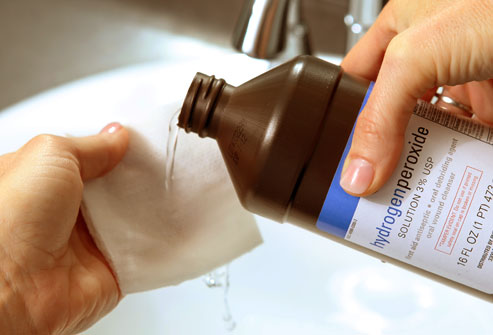
3% H2O2 is used medically for cleaning wounds, removing dead tissue, and as an oral debriding agent. Peroxide stops slow (small vessel) wound bleeding/oozing, as well.

Some sources recommend soaking infections or cuts for five to ten minutes several times a day. However, washing and rinsing action is sufficient. You shouldn’t leave the solution on open tissue for extended periods of time as, like many oxidative antiseptics, Hydrogen peroxide causes mild damage to tissue in open wounds. Therefore it is important to use with caution.

Personal Care

Mouthwash / Tooth Care
Healing Properties: Take one capful (the little white cap that comes with the bottle) and hold in your mouth for 10 minutes daily, then spit it out. You will not have canker sores and your teeth will be whiter. If you have a terrible toothache and cannot get to a dentist right away, put a capful of 3% Hydrogen peroxide into your mouth and hold it for 10 minutes several times a day. The pain will lessen greatly.

11. Mouthwash
Many people don’t realize that hydrogen peroxide makes a very effective and inexpensive mouthwash. Use 3% H202 – add a dash of liquid chlorophyll for flavoring if desired.

12. Toothpaste
Use baking soda and add enough 3% H202 to make a paste.

13. Toothbrush
Or, just dip your brush in 3% H202 and brush. Soak your toothbrush in Hydrogen peroxide to keep them free of germs.

14. Tooth Ache
Hydrogen peroxide is not a pain killer; however, as an anti-viral, antibacterial and anti-fungal agent, it is effective at treating the pathogen that is causing the infection. The following is from my own personal experience: My dentist wanted to give me a root canal some time ago as one tooth was inflamed and, in her opinion, would die. I felt some discomfort but told her that I would give it chance to heal. I rinsed with hydrogen peroxide (several times a day) as well ascoconut oil (once a day). The discomfort went away and I have had no further problems with the tooth.

15. Tooth Whitening
Having used 3% Hydrogen peroxide as a mouth wash for sometime ago, I am thrilled to note that my teeth have been beautifully and effortlessly whitened. I used to pay so much for professional whitening, those silly strips and uncomfortable trays. Live and learn.
NOTE: Do not swallow any peroxide. When the peroxide rinse is done, be sure to rinse out your mouth with water.

16. Hair Lightening
Peroxide is a bleaching agent and is used for lightened hair. Dilute 3% Hydrogen peroxide with water (50 / 50) and spray the solution on your wet hair after a shower and comb it through. You will not have the peroxide burnt blonde hair like the hair dye packages, but more natural highlights if your hair is a light brown, faddish, or dirty blonde. It also lightens gradually so it’s not a drastic change.

17. Contact Lenses
Hydrogen peroxide is used as a disinfectant in CIBA Vision’s Clear Care no rub contact lens cleaning solution, due to its ability to break down the proteins that build up on the lense from the eye’s immune response, resulting in increased comfort for those with sensitive eyes.

Sanitizing / Disinfectant / Cleaning

18. Straight or Diluted Hydrogen Perioxide
Clean your counters and table tops with hydrogen peroxide to kill germs and leave a fresh smell. Simply put a little on your dishrag when you wipe, or spray it on the counters. Use hydrogen peroxide to clean glass and mirrors with no smearing.

Keep a spray bottle of 3% (straight) to disinfect the interior of the refrigerator and kids’ school lunch boxes.

19. In the Dishwasher
Add 2 oz. of 3% Hydrogen peroxide to your regular washing formula.

Fill a spray bottle with a 50/50 mixture of 3% Hydrogen peroxide and water and keep it in every bathroom to disinfect without harming your septic system like bleach or most other disinfectants will. After rinsing off your wooden cutting board, pour or spray hydrogen peroxide (and then vinegar) on it to kill salmonella and other bacteria.

I use peroxide to clean my mirrors with, there is no smearing.
Combination of vinegar and hydrogen peroxide make a cheap, effective and non-toxic disinfectant agent and is said to be more effective at killing pathogens than bleach.  As it is non-toxic, you can use it to disinfect fruits and vegetables, as well as pet toys, equipment and cages.  In tests run at Virginia Polytechnic Institute and State University, pairing Vinegar and Hydrogen Peroxide mists, kills virtually all Salmonella, Shigella, or E. coli bacteria on heavily contaminated food and surfaces.

Directions
You need TWO spray bottles. DO NOT MIX the solutions together. Put straight vinegar in one and straight Hydrogen peroxide in the other spray bottle.

NOTE: Light destroys peroxide rather quickly. It’s best to leave it in its original bottle and screw in a spray head. DO NOT DILUTE THEM.

Remember for any sanitizer to work properly, the surface has to be clean before you use it.

When you want to sanitize a surface (vegetables, cutting board, counters, sink, cages, toys. toilets, floors, etc.), spray one (it doesn’t matter which one you use first) on the surface, then you spray on the other.  When they mix, for a brief time the chemical action of the two make a very powerful sanitizer.  You can rinse off the surface afterwards, if you want, but the result is non-toxic.

Fortunately it is cheap. BTW, we use it in the bathroom to sanitize the counters, toilets, floors, etc.

20. Mold
Clean with Hydrogen peroxide when your house becomes a biohazard after its invaded by toxic mold, such as those with water damage.

21. Humidifiers/Steamers
Use 1 pint 3% Hydrogen peroxide to 1 gallon of water.

22. Laundry / Stain Removing
Stain Remover
3% Hydrogen peroxide is the best stain lifter if used fairly soon – although blood stains as old as 2 days have been successfully lifted with Hydrogen Peroxide. Although it will bleach or discolor many fabrics. If a little peroxide is poured onto the stain it will bubble up in the area of the blood, due to a reaction with catalase. After a few minutes the excess liquid can be wiped up with a cloth or paper towel and the stain will be gone.

3% H2O2 must be applied to clothing before blood stains can be accidentally “set” with heated water. Cold water and soap are then used to remove the peroxide treated blood.

23. Washing/Laundry
You can also add a cup of hydrogen peroxide instead of bleach to a load of whites in your laundry to whiten them. If there is blood on clothing, pour directly on the soiled spot. Let it sit for a minute, then rub it and rinse with cold water. Repeat if necessary.

Peroxide is a perfect alternate solution to keep those clothes white. Also, when chlorinating clothes, they tend to wear out faster – peroxide won’t do that.

Food Preparation

24. Vegetable Soak
Use as a vegetable wash or soak to kill bacteria and neutralize chemicals. Add 1/4 cup 3% H202 to a full sink of cold water. Soak light skinned (light lettuce) 20 minutes, thicker skinned (like cucumbers) 30 minutes. Drain, dry and refrigerate. Prolongs freshness.

If time is a problem, spray vegetables (and fruits) with a solution of 3%. Let stand for a few minutes, rinse and dry.

25. Meat Sanitizing
You can also use it to rinse off your meat before cooking.

26. Leftover tossed salad
Spray with a solution of 1/2 cup water and 1 Tbsp. 5%. Drain, cover and refrigerate.

27. Marinade
Place meat, fish or poultry in a casserole (avoid using aluminium pans). Cover with a dilute solution of equal parts of water and 3% H202. Place loosely covered in refrigerator for 1/2 hour. Rinse and cook.

28. Sprouting Seeds
Add 1 ounce 3% Hydrogen peroxide to 1 pint of water and soak the seeds overnight. Add the same amount of hydrogen peroxide each time you rinse the seeds.

Grades of Hydrogen Peroxide

A) 3.5% Pharmaceutical Grade: This is the grade sold at your local drugstore or supermarket. This product is not recommended for internal use. It contains an assortment of stabilizers which shouldn’t be ingested. Various stabilizers include: acetanilide, phenol, sodium stanate and tertrasodium phosphate.

B) 6% Beautician Grade: This is used in beauty shops to color hair and is not recommended for internal use.

C) 30% Reagent Grade: This is used for various scientific experimentation and also contains stabilizers. It is also not for internal use.

D) 30% to 32% Electronic Grade: This is used to clean electronic parts and not for internal use.

E) 35% Technical Grade: This is a more concentrated product than the Reagent Grade and differs slightly in that phosphorus is added to help neutralize any chlorine from the water used to dilute it.

F) 35% Food Grade: This is used in the production of foods like cheese, eggs, and whey-containing products. It is also sprayed on the foil lining of aseptic packages containing fruit juices and milk products. THIS IS THE ONLY GRADE RECOMMENDED FOR INTERNAL USE.

G) 90%: This is used as an oxygen source for rocket fuel.
Only 35% Food Grade hydrogen peroxide is recommended for internal use. At this concentration, however, hydrogen peroxide is a very strong oxidizer and if not diluted, it can be extremely dangerous or even fatal. Any concentrations over 10% can cause neurological reactions and damage to the upper gastrointestinal tract. There have been two known fatalities in children who ingested 27% and 40% concentrations of H202. Another reports tells of a 26 month old female who swallowed one mouthful of 35% H202. She immediately began vomiting, followed by fainting and respiratory arrest. Fortunately, she was under emergency room care and although she experienced erosion and bleeding of the stomach and esophagus, she survived the incident. When she was re-examined 12 days later, the areas involved had healed (J Toxicol Clin Toxicol 90;28(1):95-100).

Personal note:  As with ANY food, drug, or supplement, using the product according to instructions is key to safety.  If someone uses too much, then of course ramifications may be felt.  We’ve NEVER heard of ANY harmful side effects from the correct usage of Food Grade hydrogen peroxide.

35% Food Grade H202 must be….
1. handled carefully (direct contact will burn the skin- immediate flushing with water is recommended).
2. diluted properly before use.
3. stored safely and properly (after making a dilution the remainder should be stored tightly sealed in the freezer).
One of the most convenient methods of dispensing 35% H202 is from a small glass eye dropper bottle. These can be purchased at your local drugstore. Fill this with the 35% H202 and store the larger container in the freezer compartment of your refrigerator until more is needed. Store the eye dropper bottle in the refrigerator. The drops are mixed with either 6 to 8 ounces of distilled water, juice, aloe vera juice or gel.
(Don’t use chlorinated tap water to dilute the peroxide!)

Article Source
Website docakilah.wordpress.com
Facebook Fanpage facebook.com/celestial.healing